Denver is a city of contrasts after sunset. The high, dry air keeps the sky crisp. Snow cover can turn a yard into a mirror. In summer, blue fescue and native grasses shimmer at twilight. A lighting plan that works back East often looks harsh here, or it disappears in the wide-open dark. That is why the choice between uplighting and downlighting matters so much for Denver landscape lighting. It is not a simple either-or, it is a set of decisions about beams, glare, wildlife, neighbors, and the character of your architecture and plantings.
I have walked plenty of yards along Washington Park and Park Hill where a pair of misplaced spotlights turned a pretty crabapple into a blinding orb. I have also seen foothills homes where a few well-placed moonlights made rough flagstone look like it was lit by real moon. The tools are simple, the nuance is not.
What uplighting actually does
Uplighting sends light upward from a fixture placed at or near ground level. In practice for landscape lighting Denver homeowners use, that means small, sealed, low voltage fixtures set in mulch, granite, or turf, aimed at facades, trunks, statuary, or specimen shrubs. It is a dramatic technique because our eyes do not expect to see light coming from below. When it works, it creates depth, picks out texture, and draws the viewer from the street to the front door.
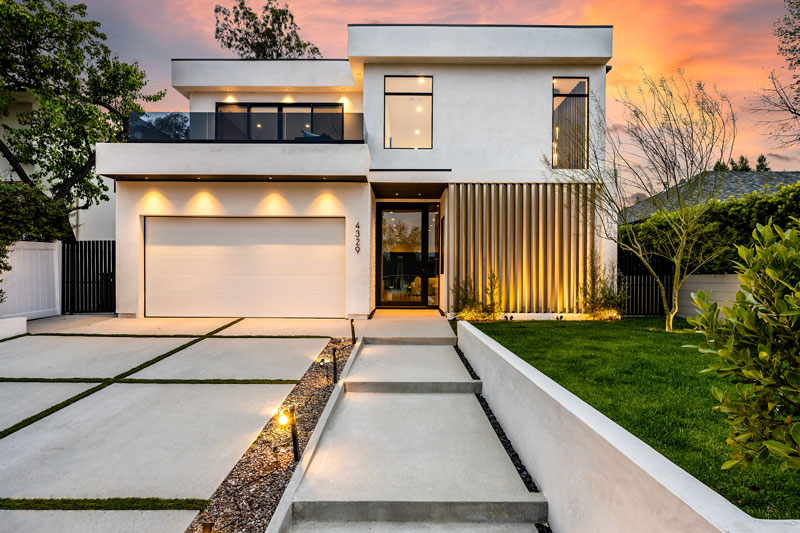
Fixtures for uplighting are usually narrow to medium beam spots between 10 and 45 degrees, in the 200 to 600 lumen range for yards, and up to 1,000 lumens for tall trees or two story walls. In Denver exterior lighting, I lean warm, 2700K to 3000K, to keep brick and sandstone from looking cold. Most modern lamps have a high CRI, 90 or better, which keeps wood, stucco, and plant greens from going flat.
Uplighting shines on architectural materials here. On turn of the century brick, a pair of 15 degree beams at the base can highlight the corbelling without washing the windows. On a stucco mid-century ranch, a wider wash, 40 degrees, at lower intensity reduces hot spots and makes the wall glow. Xeriscape beds common in outdoor lighting Colorado homeowners install, with boulders and low-water perennials, take uplight well because rock faces catch it with texture and do not grow leaves that shade it out by July.
There are trade-offs. Denver is sensitive to light pollution. You do not want beams bleeding into the sky. Many neighborhoods expect Dark Sky friendly practice, although the city does not mandate a single standard on private residences. Shields and careful aim matter. Snow is another issue. After a storm I have seen standard 300 lumen uplights bounce so much light off drifts that the effect looked hospital bright. If you use uplighting in areas that collect snow, dim it in winter, or switch to very narrow beams that punch through without splashing across white ground.
Wind and hail are not abstract. Ground fixtures take abuse from pea gravel blown by gusts and shovels in winter. I specify thick cast brass or marine grade aluminum for colorado outdoor lighting, with convex tempered glass that sheds water. Powder coated steel looks nice in a showroom, then shows rust rings by year two at altitude. Denver outdoor fixtures live in intense UV, and rubber gaskets harden faster. The best manufacturers use silicone, not neoprene, for seals, and tinned copper for leads. That detail will save you money over the lifespan of the system.
Downlighting, and why Denver loves it
Downlighting takes the opposite approach. You mount a fixture higher up, then aim light downward, letting it graze through branches or along eaves. It feels natural because it mimics moonlight and porch light. In denver yard lighting, this is often the more neighbor-friendly choice. Properly shielded and aimed, it controls glare, keeps light on the intended surface, and reduces skyglow.
There are two main ways I use downlighting. One is architectural, tucked under soffits or beam tails to wash a facade, an entry, or a patio. The other is arboreal, clamped into a mature tree at 15 to 25 feet and aimed so the beam filters through leaves and lands softly on walkways and seating areas. For Denver garden lighting, that arboreal approach is magic when you have a healthy shade tree. I aim across branches, not straight down, to break up the beam and produce those leaf shadows people love.
Practical realities apply. Tree mounting in Denver lighting plans needs care. Ash borers and pruning cycles can loosen hardware. I use stainless lag bolts only, stop short of over-penetration, and return each spring to loosen straps or adjust as the tree grows. A small drip loop, UV-resistant cable ties, and black wire disappear in the canopy. There is also a seasonal twist. In November the leaves vanish, and what looked perfect in July becomes brighter. Dimming solves this. Many systems use 12V low voltage with PWM dimmers or smart transformers, so you can create two scenes, one for leaf-on and one for leaf-off.
Architectural downlights need full cutoff trim or shrouds in denver exterior lighting because neighboring lots are often close. That keeps light out of bedroom windows and onto the flagstone or vertical cladding you want to show. For eave mounts, I pick 5 to 7 watt LEDs, around 400 to 600 lumens, with a 36 to 60 degree beam, and I mind the mounting height to beam spread ratio. At an 18 foot eave height, a 36 degree beam makes a crisp 12 foot oval pool. At 10 feet, the same lamp floods too tightly. These are small arithmetic checks that prevent weak edges or hotspots later.
Snow helps downlighting. A gentle top-down beam skims across snow, which glows without blowing back into your eyes. Path lighting in particular benefits. Many Denver pathway lighting plans skip bollards entirely and run downlights in trees and soffits, keeping the grade clear for shovels and not creating targets for tripping or breakage.
Uplighting vs downlighting: where each wins
Most successful landscape lighting Denver projects do not choose one technique. They use each where it belongs.
- Use uplighting to model vertical texture, anchor focal points from the curb, and give shape to trunks, columns, and stonework. It brings a house forward. Use downlighting to make spaces livable after dark. It sets the mood on patios, improves safety on steps, and offers subtlety on planting beds. It pulls you outside.
Balance matters. A pair of hard uplights on a blue spruce can make your house look like a car dealership. A yard lit only from above can feel flat, like a porch light. I start with function. Where do feet go? Where do eyes go? Then I layer. One gentle downlight on a patio table, one 15 degree uplight on the front column base, a dim wash under the soffit to backstop it, and a moonlight in the locust to tie it together. That light story feels calm, and it lowers the total lumen count.
The Denver context: altitude, wildlife, and neighbors
Denver’s thin air adds punch to every lumen. LEDs also run hotter here. Fixtures that are fine at sea level can cook drivers when a July afternoon hits 98 and the fixture sits under a dark soffit. I look for fixtures rated to higher ambient temperatures. It shows up in the spec sheet as Ta, often 40 C or better. Cheaper lamp replacements with plastic bodies fade fast in UV and drift in color, turning a 2700K lamp into a strange peach by year three. For denver lighting solutions that last, buy brands known to live outdoors at altitude.
Wildlife comes into play, especially near open space. Owls use dark perches to hunt. Constant bright uplighting on tall cottonwoods near ravines can disrupt their patterns. The same goes for moths. As part of responsible denver’s outdoor lighting, I keep the color temperature warm and the beam tight near native plant beds, and I run shorter schedules in midsummer to give the yard real night.
Neighbors care about glare more than anything. A small mistake with aim punishes the house across the street. I test at night during focus, not at dusk. With each new head, I stand in the sidewalk or sit in the neighbor’s view cone and adjust until the source disappears and only the effect remains. Shield caps and louver inserts are cheap insurance.
Finally, snow and freeze-thaw. In exterior lighting Denver residents set at grade, frost heave will tilt fixtures. On new builds, I use a crushed granite pocket under each fixture for drainage and set a bed of compacted fines around it. I avoid bare topsoil, which shifts and sheds dirt onto lenses. Spring maintenance includes releveling and cleaning, a 30 minute visit that keeps your denver outdoor lights looking cared for.
Beam control, color, and brightness that feel right
The fastest way to make a yard look over-lit is to use too many lumens and too wide a beam. The fastest way to make it look expensive and calm is to control the edges.
On stone, raking light works. Point the beam across the surface, not straight at it, and you get relief and shadow that reads as texture. On smooth stucco, wash light works. Aim a broader, softer beam that avoids scallops. Where possible, overlap by about a third to prevent stripes. On trees, pick a beam to fit the canopy width at the target height. A 20 foot tall hawthorn with a 12 foot spread takes a 24 to 36 degree beam from 5 feet out. A 35 foot spruce with a 16 foot base spread may want a pair of narrow beams, 15 degrees, one low and one mid, instead of one big flood.
Color temperature sets the emotional tone. For most outdoor lighting denver clients, 2700K feels like home. It flatters skin tones on patios and keeps brick from going pink. I reserve 3000K for stone that reads too yellow at 2700K, or where safety lighting needs a touch more contrast. I almost never use 4000K in residential Denver outdoor illumination. It turns blue spruce icy and makes flagstone go gray. For art pieces that need pop, a 3000K 90 CRI lamp can make reds and blues read true without slipping into a cool look.
Brightness ties back to use and background. In a city yard with warm porch lights nearby, 200 to 350 lumens per accent head usually handles uplighting of single elements. On wide walls, a pair of 500 lumen wash fixtures might be better than four 250s, because you keep fixture count down and can place them farther out for smoother gradients. For downlights out of trees, 300 to 600 lumens with soft optics creates believable moonlight. Indoors your eye adapts to 10 to 30 foot-candles. Outside, 1 to 5 is comfortable. You do not need more than that for most denver outdoor lighting plans.
Pathways, steps, and driveways without glare
Path lighting is the easiest place to overspend and underperform. The market pushes cute mushroom caps. In Denver pathway lighting, those fixtures often get bent by shovels or buried in drift lines. I use them sparingly and keep them at least 18 inches back from the path edge. A spacing of 10 to 15 feet, in a staggered rhythm, avoids the runway look. Good path heads emit 100 to 200 lumens with full cutoff to keep light on the grade, not in your eyes.
Steps are different. I prefer downlights from rail posts or recessed under nosings to general washes. outdoor lighting services denver You can also graze a riser from the side with a narrow beam. A simple rule: never show a bright bulb at eye height. On driveways, especially in outdoor lighting in Denver neighborhoods where lots are tight, I avoid bollards near the street. Low, shielded step lights in the wall or IDA-friendly soffit cans do the job without drawing attention.
Power, controls, and durability in Denver conditions
Most residential denver landscape lighting runs on 12V low voltage. The transformer is the heart. Sizing is a math exercise. Sum the VA of your lamps, add 20 to 30 percent headroom for dimming and future runs, and pick a unit with multi-tap outputs to manage voltage drop. Longer cable runs and higher wattage heads produce drop. On a 120 foot run at 12V with 14 gauge cable and a 60 watt load, you can lose more than 1V by the end, which dims the far fixtures and can create color shift. I often home-run higher loads and keep branch runs short. Where the layout allows, 12 gauge cable holds voltage better.
Connections fail first. Denver soil is dusty in summer, soggy after spring snows, and salty near driveways in winter. Dry-crimp connectors corrode fast. Use gel-filled, heat-shrink butt splices or proprietary waterproof hubs. Keep all splices off the soil in a small gravel cup. Label runs. When you come back for service, you will thank your past self.
Controls matter more than people think. A basic photocell and timer handles most needs, but smart transformers or plug-in smart switches let you create scenes. For example, you can run the architectural downlights to midnight, the tree moonlights to 10 pm, and the uplights to 11 on weekends. When snow reflects more light, a winter scene at 60 percent output looks better than full power. Smart does not have to mean complicated. Good outdoor lighting systems denver homeowners adopt tend to have three scenes at most and simple overrides.
Installation realities unique to Denver
Clay, cobble, and old irrigation. That is the mix. For outdoor lighting installations denver crews run into sprinkler lines more than anything. Call for locates on utilities, but do not expect anyone to mark the private irrigation. Use a flat spade, slice shallow, and feel for lines. When I cross a bed full of decorative rock, I trench under, lay conduit, and backfill with fines so the rock does not pinch cable.
Depth is a compromise. You do not need to bury low voltage cable a foot deep, but you should protect it from aerators and gardeners. Four to six inches is typical. In turf that sees aeration, I sleeve crossings. Where cable passes under a walkway, use PVC conduit. You will forget about it until a new garden bed goes in, and then you will be glad it is protected.
Mounting under soffits in older bungalows requires care. Many eaves are vented with wood slats. You can mount to rafter tails and fish cable along the attic edge, but mind insulation and heat. Always tie into GFCI protected circuits. For lighting installations denver inspectors are most concerned about, they look at listed fixtures outdoors and wet location ratings.
Maintenance is predictable. Once a year, clean lenses, clear mulch off caps, tighten tree hardware, realign beams, and test the transformer. LED systems can run 30,000 to 50,000 hours. In a typical schedule of 1,500 to 2,000 hours per year, that is a decade or more. In practice, hail and shovels will kill a few fixtures first. Keep a couple of spare lamps that match color temperature, and note the brand and model in your home file.
Two Denver yards, two mixes that work
A brick bungalow near Wash Park had three obvious needs: a welcoming front porch, a safe side path to the backyard gate, and a small patio under an aging honeylocust. The owner wanted calm, not a showcase. We set two 300 lumen 24 degree uplights at the base of the front brick pilasters, aimed just to the capital line, with tight shrouds so the beam stopped short of the upper sash windows. Under the porch eave, two 7 watt, 3000K full cutoff downlights washed the threshold and swing. Along the side path, instead of mushroom caps, we clamped two 400 lumen downlights at 14 feet in the honeylocust and aimed them across the flagstone. The neighbor across the alley later commented that the yard looked “soft, like moonlight,” and no one had to move a single fixture for snow shoveling. When leaves fell, we dimmed the tree heads to 60 percent and kept the porch at full. That shift kept the scene balanced without touching hardware.
In the foothills west of Golden, a contemporary home had tall board-formed concrete walls and native boulder outcrops. Wind howled on that site most nights. We avoided tall path lights entirely. Architectural downlights under the deep eaves handled the terrace and stair. For drama, we used uplighting only on two elements: a 25 foot aspen cluster and a sculptural steel gate. Narrow 15 degree 500 lumen beams at the aspen trunks created elegant stripes that read from the driveway without spilling into the sky. The gate got a pair of cross-aimed 300 lumen heads to make the cutouts glow. Everything else came from above, through three high tree-mounted moonlights at 22 feet, placed on the leeward sides of trunks to shelter them from prevailing winds. A single 300 VA smart transformer ran the lot. In winter, the snow field on the terrace turned into a luminous canvas under the moonlights. That project used fewer than a dozen fixtures, yet it felt finished.
Mistakes I see, and how to avoid them
The first is glare. A poorly shielded uplight near the curb looks cheap and irritates drivers. Use long cowls and louvered inserts. Aim tight, test from off property, and lower output if needed.
The second is over-lighting. If you can name each fixture as you look at the yard, you have used too much. Swap two heads for one with the right beam, and dim. Your eyes need contrast to feel at ease.
The third is disregard for snow. Path lights that sit six inches tall will vanish for weeks. Choose taller, shielded forms positioned back from the edge, or pick downlighting and keep the grade clear.
The fourth is the wrong color temperature mix. Mixing 2700K and 4000K on the same facade reads like a mistake. Standardize across denver lighting to a narrow band, and your eyes will relax.
The fifth is sloppy wiring. Twisted wire nuts in wet mulch will fail after the first winter. Use proper waterproof connections and label each run at the transformer.
A quick side by side when you are on the fence
- Uplighting emphasizes form and texture, adds curb appeal, and draws the eye. It risks glare and snow bounce if mis-aimed. Downlighting feels natural and neighbor friendly, improves safety, and resists snow issues. It needs height and secure mounting points. Uplighting usually needs fewer mounting points but more shielding. Downlighting often needs fewer fixtures for wider areas but plan for tree health and access. Both benefit from warm color temperature and careful beam control. Both need dimming to adjust for seasons in Denver’s climate.
Before you choose, walk the yard at night with this pocket checklist
- Stand in the street and in your neighbor’s window line, then mark where glare must be avoided. That view should govern aim. Note tree structure and eave heights, and identify solid mounting points for downlights. If none exist, lean on uplighting and soffit washes. Test with a handheld flashlight or a temporary LED on a spike. Ten minutes of mock-up prevents a year of regret. Plan cable paths that avoid irrigation and snow shove zones. Cross paths at right angles and sleeve where practical. Decide on a single color temperature and two brightness scenes, summer with leaves and winter without.
Tying it all together for Denver homes
Great outdoor lighting solutions denver homeowners enjoy are simple, restrained, and adapted to the place. The altitude, the dry air, the bark of a plains cottonwood, the long shadows of winter, and the close cadence of city lots all argue for subtlety. Use uplighting to celebrate the special things your property already has. Use downlighting to make the way from the car to the kitchen easy and to give your patio the right kind of night. Keep the beams tight, the color warm, and the sources hidden.
There is no prize for the brightest house on the block. There is a quiet contentment, though, in stepping outside on a July night and finding the seat you love already held in a gentle pool of light. If you are working with outdoor lighting services denver offers, ask to see mock-ups before anything is permanent. If you are doing it yourself, start small, buy quality denver outdoor fixtures rated for our climate, and let the yard teach you what it wants after dark. A few thoughtful choices, set carefully, will outshine a box of bargain spikes every time. And when the first real snow arrives, you will see how good design pays off, with light that settles in, rather than fights the night.